 UK
UK US
US 





What Does EN 61482 Mean? A Buyer’s Guide to Arc Flash Protection Ratings
Key Takeways
- EN 61482 is the European benchmark for protective clothing against the thermal hazards of an electric arc, commonly called arc flash.
- Buyers usually see EN 61482-2:2020 on arc flash garments; it covers design, performance level, labelling and certification.
- The latest arc flash standards use the open arc test method and the box test method to determine ATPV, ELIM, and arc protection class ratings.
- These ratings help match arc flash PPE to the incident energy levels identified in a risk assessment.
- Reece Safety’s range of Arc Flash Protection helps buyers choose compliant clothing and the right PPE for site work.
What Is EN 61482?
EN 61482 is the European version of IEC 61482, a safety standard developed by the International Electrotechnical Commission that provides guidelines and requirements for protective clothing designed to protect against the thermal hazards associated with electric arcs. In practice, “what does EN 61482 mean” is simple: the clothing has been tested for arc flash protection, not just ordinary heat, welding splash or chemical risk.
The main parts are EN IEC 61482-1-1:2019 for the open arc test, EN 61482-1-2:2014 for the box test, and EN 61482-2:2020 for complete garment requirements. EN 61482 serves as the benchmark for Personal Protective Equipment (PPE) selection for electricians and maintenance crews.
Why EN 61482 Matters for Arc Flash PPE Buyers
An arc flash can generate temperatures up to 20,000°C, causing severe burns, exposure to molten metal, and intense radiant energy. That is enough energy to cause serious injury in high-risk environments where workers exposed to live systems carry out electrical work.
Compliance with EN 61482 is essential for ensuring safety, as it provides guidelines for the design of protective clothing against thermal hazards associated with electric arcs. It also helps UK and European Union duty holders stay compliant under electrical safety and PPE rules. Clothing certified only to EN ISO 11612 may resist flame, but it does not provide electric arc protection. For buyers, the difference is critical: arc flash PPE must be tested for arc thermal hazards.
How EN 61482 Is Structured: Key Parts Explained
EN 61482 combines test methods with garment rules:
- EN IEC 61482-1-1:2019 is the open arc test method. EN 61482-1-1 measures the precise amount of thermal energy a fabric blocks and assigns a rating in calories per square centimetre, expressed as cal/cm² or cal cm².
- EN 61482-1-2:2014 is the box test method. It assigns arc protection class ratings.
- EN 61482-2:2020 is the clothing standard. To achieve EN 61482-2 certification, protective apparel must undergo testing via specific methodologies.
The IEC 61482 standard includes two recognised testing methods for protective clothing: the Open Arc test, IEC 61482-1-1, and the Box Test, IEC 61482-1-2, each assessing the garment’s ability to withstand thermal energy from an arc flash. You may also see IEC 61482-1 used as shorthand for these test parts.
Open Arc Test (EN IEC 61482‑1‑1:2019) and Arc Thermal Performance Values
The open arc test uses an unconstrained arc to measure heat transfer through a fabric sample or complete garment. The Open Arc Test Method, IEC 61482-1-1, measures the Arc Thermal Protection Value (ATPV) and the Incident Energy Limit (ELIM) of protective clothing, indicating the maximum thermal energy the garment can withstand before causing second-degree burns.
The Box Test Method exposes fabric to a directed electric arc of either 4 kA or 7 kA in a confined space, while the Open Arc Test uses an 8 kA circular arc from a distance of 30 cm to assess the garment’s thermal protection capabilities.
ATPV, or arc thermal performance value, is the maximum thermal energy that arc flash protective clothing can withstand before there is a 50% probability of second-degree burns occurring on the wearer. The atpv value is compared with the site incident energy level.
EBT, or energy break-open threshold, is the point where the test material breaks open.
ELIM, or incident energy limit, represents the maximum incident energy that protective clothing can prevent against, ensuring a 0% probability of causing second-degree burns to the wearer. The introduction of the ELIM rating in 2019 established a more conservative safety threshold than ATPV, as it eliminates the risk of burns entirely, whereas ATPV allows for a 50% probability of burns. In plain terms, the elim value or elim rating is safer to specify where possible. elim represents a no-failure result against the stoll curve burn model.
Box Test Method (EN 61482‑1‑2) and Arc Protection Classes
The box test simulates an electric arc inside a confined switchgear-like box. The IEC 61482-1-2 Box Test Method classifies protective clothing into Arc Protection Class (APC) 1 or APC 2 based on heat transfer measurements, with APC 2 providing the highest level of protection against electric arc hazards.
There are two classes: APC 1 is tested at 4 kA, and APC 2 is tested at 7 kA. APC 2 shows a higher protection class in this method, but arc protection class results cannot be directly converted into ATPV or ELIM energy levels.
EN 61482‑2:2020 – The Core Garment Standard
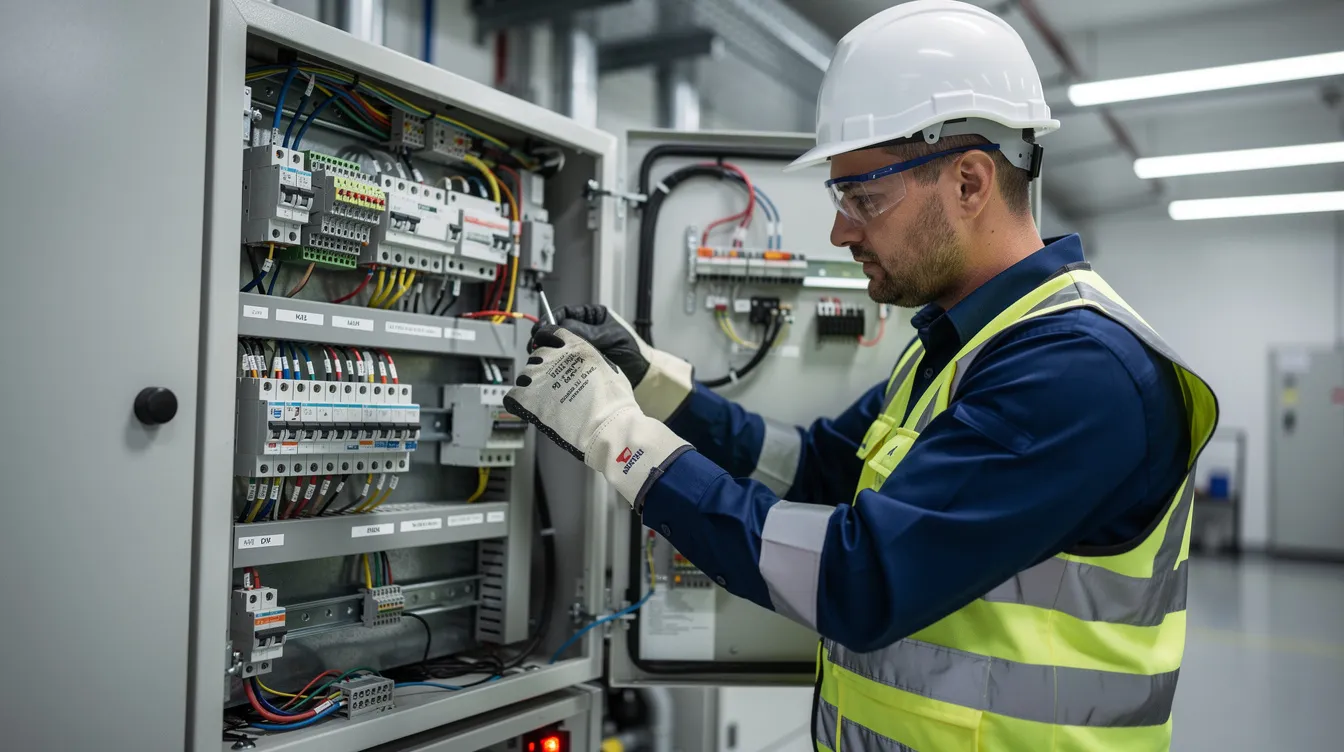
EN 61482-2:2020 is the key label to look for because it covers complete arc-flash garments, not just fabric. Certification evaluates the entire garment as a unified whole; if any single component fails, the garment fails.
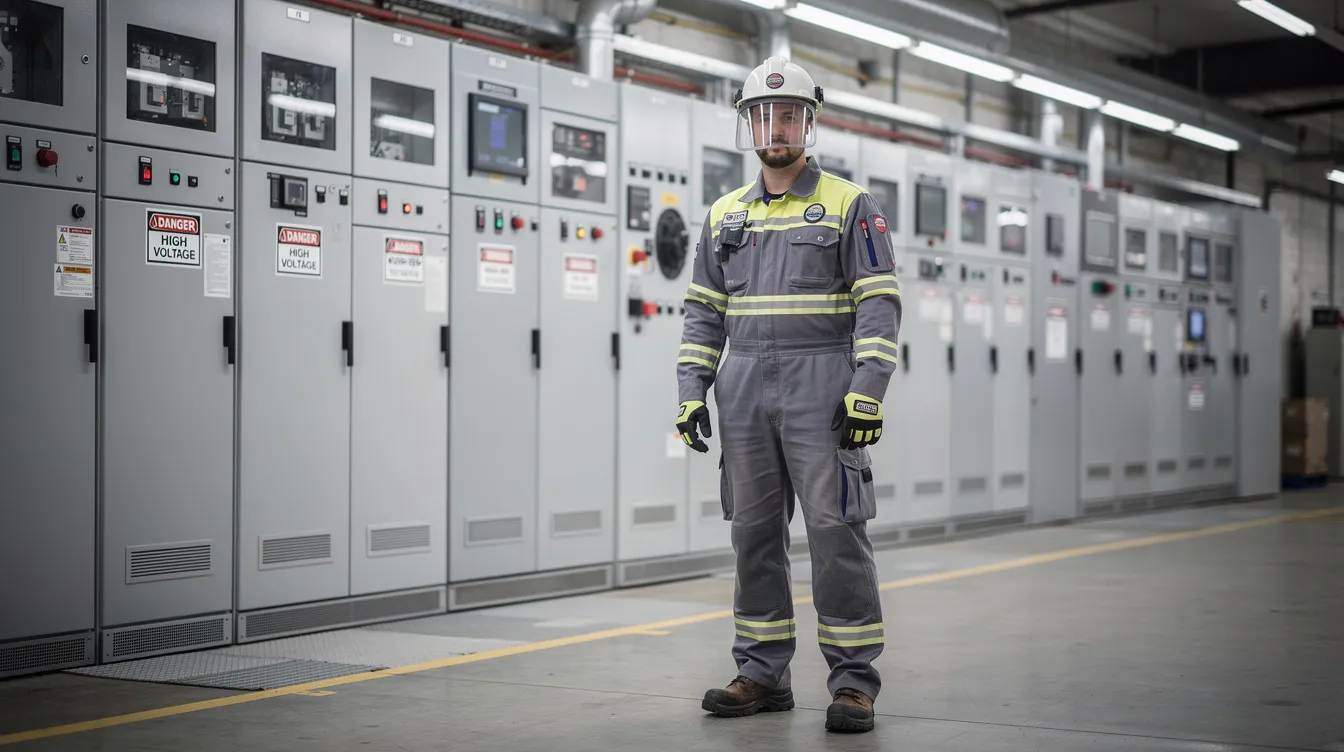
EN 61482-2 outlines how arc flash garments must be tested and assessed to withstand the heat, pressure, and force released during an electrical fault, ensuring comprehensive protection for the wearer. Garments must feature long sleeves and completely cover the body up to the neck, in accordance with EN 61482-2. EN 61482 applies only to body-covering clothing up to the neck and does not cover protection for the extremities.
All assembly stitching must be performed with permanently flame-retardant threads in accordance with EN 61482-2 guidelines. Any exterior metal components must be completely covered to prevent heat conduction to the wearer. Fasteners must remain easily openable even after direct exposure to an arc blast so wearers can immediately shed clothing. Garments must not be worn with synthetic undergarments, as they can melt into the skin under intense heat exposure according to EN 61482.
Labels should show EN 61482-2:2020, the electric arc pictogram, the cal rating, ATPV/ELIM and/or APC. An unsubscribe link on an email is irrelevant; the garment label is what matters.
EN 61482 and Other Arc Flash Standards (NFPA 70E, ASTM F1506, EN ISO 11612)
Global sites may also reference NFPA 70E or ASTM F1506. These use open arc testing too, but labelling and categories differ. EN ISO 11612 and EN ISO 11611 cover heat, flame and welding, but not full arc thermal performance.
For UK and EU workplaces, protective clothing certified to IEC 61482 must meet specific performance requirements, including the ability to withstand defined levels of electric arc exposure, which are classified into Arc Protection Classes (APC) 1 and 2 based on the test methods used. Protective clothing certified to EN 61482 must pass rigorous testing methods, including the Open Arc test and the Box Test, to ensure it meets the required safety standards for arc flash protection.
Using EN 61482 Ratings to Choose Arc Flash PPE Systems
Start with a risk assessment or arc flash study. It identifies incident energy in cal/cm² at each task location. Then choose clothing with an ATPV or ELIM at or above that energy level, or select the appropriate APC where the box test is specified.
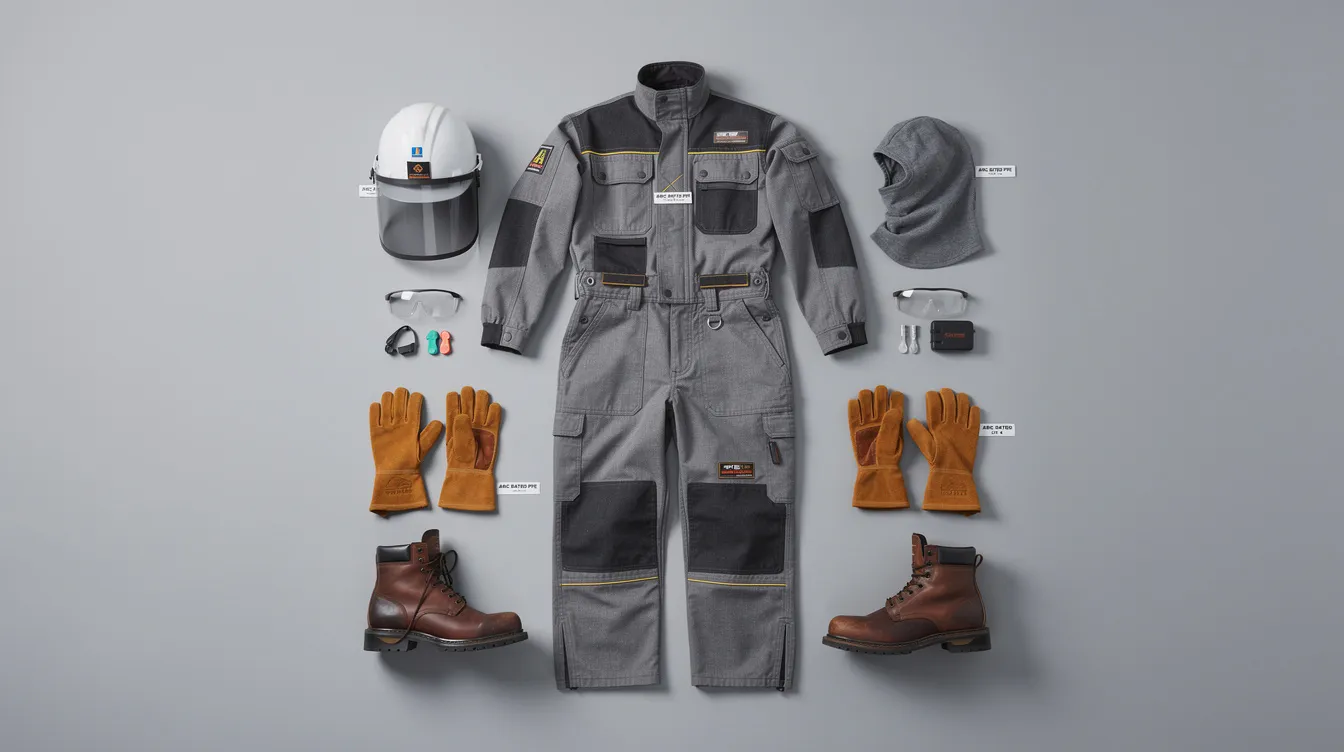
Layering configurations can significantly increase thermal protection and must be tested together for compliance. A base layer, coverall, jacket, trousers, hood and gloves should be selected as a system, because the lowest level of protection can limit the whole setup. Reece Safety can help ensure workers receive the appropriate protection and that PPE aligns with the site's risk level.
FAQs – EN 61482 and Arc Flash Protection
UK law does not simply say every item must carry EN 61482. However, where an arc flash hazard exists, EN 61482-2 certified clothing is the accepted means of demonstrating suitable arc flash protection.
Yes, but the system depends on the weakest material, garment or layer. For critical work, use combinations tested together so the full system has a known arc thermal rating.
There is no fixed replacement date. Replace clothing after damage, contamination, excessive washing, thinning, failed closures or any arc incident. Always follow the manufacturer’s wash and inspection guidance.
EN 61482-2 focuses on body clothing up to the neck. Hands, face, head and feet need compatible arc flash PPE tested to their own relevant standards.
Check for EN 61482-2:2020, the electric arc pictogram, ATPV and ELIM values in cal/cm² and/or APC 1 or APC 2, garment size, manufacturer details and care instructions. Use those markings to choose protection that matches your risk assessment.