 UK
 US






Arc Flash Face Shields, Visors and Helmets
Your face and head are the hardest part of the body to protect in an arc flash, and the easiest to leave uncovered. Clothing protects the torso and limbs; without a rated shield, visor, or hood, heat and light still reach you. Everything on this page is arc-rated in cal/cm2, so you can match it to the incident energy in your risk assessment, with stocked protection from 12.1 cal/cm2 up to 47 cal/cm2 in headband, helmet-mounted, and full-hood forms.
Shield, helmet and visor, or hood
Three ways to protect your head and face, and the right one depends on what else is going on around you.
A face shield on a headband is the quickest to put on and take off, and the lightest to wear for short tasks. It protects the face but not the top of the head.
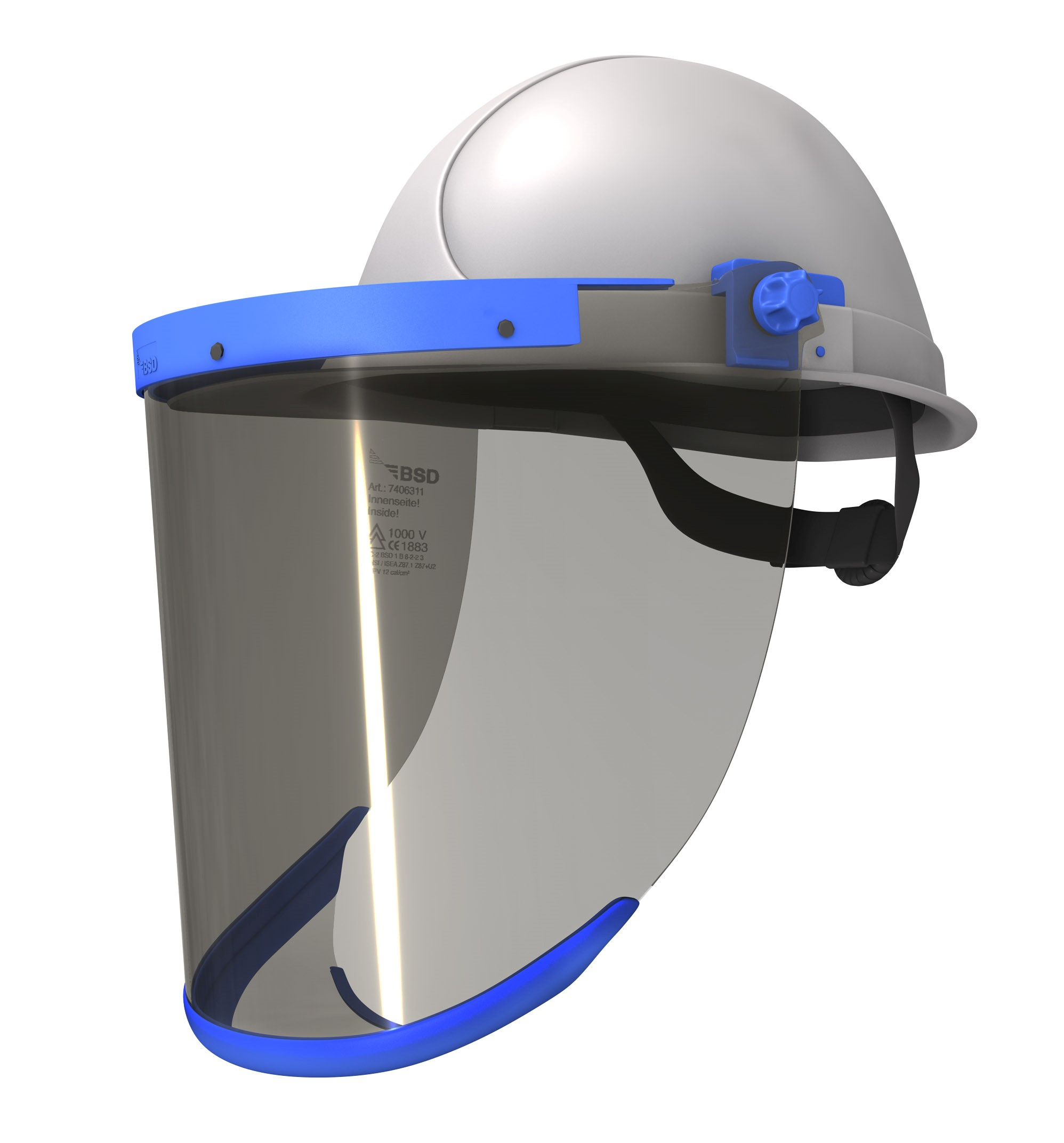
A helmet with an integrated visor adds impact protection, so it suits work where there is a risk from falling objects or from knocking your head on a panel. Most people now choose this over a separate helmet and shield, because there is nothing to forget and nothing to misalign.
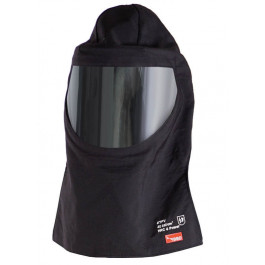
An arc flash hood gives the most complete coverage, wrapping the whole head and neck rather than just the face. It is the right choice at the higher energy levels, and the usual reason to pick one is coverage rather than convenience. A hood is made of soft material, so it won't protect you from a falling object. Where there is an impact risk, a hood goes with a helmet rather than instead of one.
Whichever you choose, the rating has to be read alongside the rest of your PPE. A 40 cal/cm2 hood over a 12 cal/cm2 coverall does not make you protected to 40.
Clear or tinted
Most of what we stock is clear. Ten of our twelve face shields and integrated visors are clear or specifically non-tinted because, on live electrical work, you need to read cable colours and labels correctly, and a dark visor gets in the way.
The two Petzl Vertex packages use a grey low tint instead, chosen to cut glare without the colour recognition problems a heavier tint brings. If your team works in bright conditions or outdoors, that is the pair to look at. For everything else, clear is the default for a reason.
Arc ratings on face and head protection
The cal/cm2 figure on a shield, visor or hood is the energy it is tested to withstand. Match it to the incident energy your risk assessment gives for the task, and the garment rating has to meet or exceed that figure, not sit just underneath it.
What we hold in stock, by type:
- Face shields and helmet visors: 12, 14, 26 and 28 cal/cm2, in headband and helmet mounted forms, including integrated helmet and visor units.
- Arc flash hoods: 14.0, 25.0, 40.0 and 47.0 cal/cm2, with the top two at HRC 4.
- Arc rated balaclavas: 12.1 cal/cm2 single layer and 34.0 cal/cm2 double layer. A balaclava is worn underneath, not instead of a shield or hood.
- Face and hands kits: 12 cal/cm2 and 26 cal/cm2 overall ratings, plus a working at height version and a CAT 2 kit rated 8 to 12 cal/cm2 in sizes S to XXL.
Ratings on this equipment are tested and certified rather than claimed. Depending on the item, you will see ASTM F2178 providing an ATPV figure in cal/cm2 and GS-ET-29 providing an arc protection class, alongside the general eye and face protection standards EN 166 and EN 170. The integrated helmets also carry EN 397 for industrial helmets and EN 50365 for electrical insulation.
If you know the incident energy figure and want it checked against a specific task, call us before you order rather than after.
Buying the kit rather than the parts
The face and hands kits exist because the shield is rarely the only thing missing. Each one brings head, face, and hand protection together under a single overall rating, removing the most common mistake we see: a correctly rated shield paired with gloves that aren't rated at all. If you are specifying for a team rather than replacing one item, start with the kits.
What goes with this
Face protection is one part of the set. The rest sits in the arc flash clothing range, including switching suit kits for the highest energy work and arc rated gloves. If you are working out which level you need across the whole set, the guidance on the arc flash clothing page explains how arc ratings and category levels relate.