 UK
 US






Electrical Safety Gloves
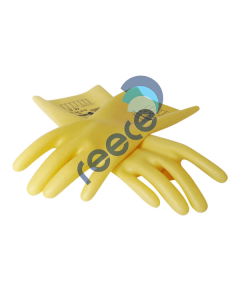
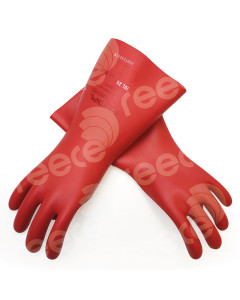
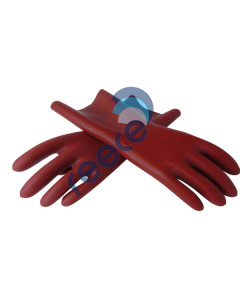
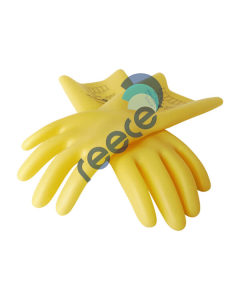
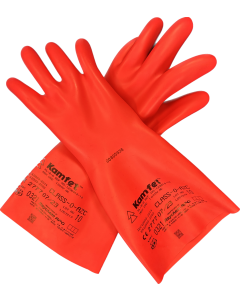
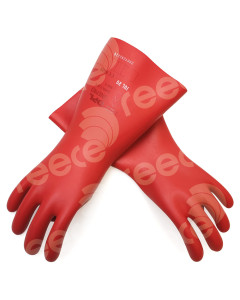
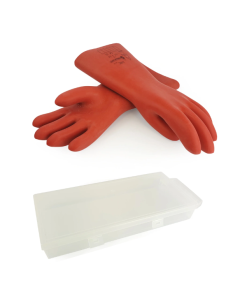
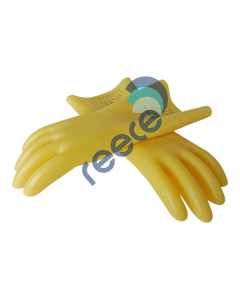
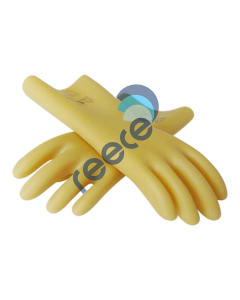
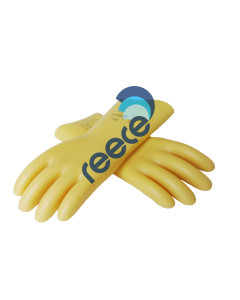
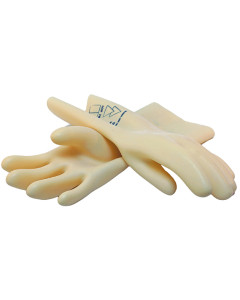
Insulating gloves are rated by class, and the class tells you the maximum voltage you can work on. We stock the full range, from Class 00 at 500V through to Class 4 at 36,000V, in latex and composite, with arc rated options at Class 00 and Class 0. Every glove is individually test stamped, sizes run 7 to 12, and we run an electrical retesting service for Class 1 and above so your gloves stay certified once they are in use.
Which class do you need
The class is set by the voltage you will be working on, not by preference. Pick the class that covers the working voltage of the task, and remember the figure is a maximum rather than a target.
| Class | Maximum working voltage | Typical use |
|---|---|---|
| Class 00 | 500V AC | Low voltage work, consumer units, panel work |
| Class 0 | 1,000V AC | General electrical work, EV systems, LV distribution |
| Class 1 | 7,500V | Switching and jointing on HV networks |
| Class 2 | 17,000V | 11kV network operations |
| Class 3 | 26,500V | Higher voltage distribution |
| Class 4 | 36,000V | 33kV network operations |
If you are buying for 11kV or 33kV work, Class 2 and Class 4 are the usual answers. If you are not certain which class the task calls for, call us with the working voltage rather than guessing upwards, because a heavier glove you cannot work in is a glove that comes off.
Latex, composite, or arc rated
Latex insulating gloves are the standard choice and cover every class we stock. They are 360mm long, around 1.5mm thick, made from a natural latex base and individually test stamped.
Composite gloves combine the insulating layer with mechanical protection in one glove, so you are not relying on a separate overglove.
Arc rated insulating gloves do two jobs at once, giving you a voltage class and a thermal arc rating in cal/cm2. We stock these at Class 00 and Class 0 only: the Class 00 composite at 26.3 cal/cm2, the Class 0 composite at 71.6 cal/cm2, a Class 0 at 14 cal/cm2 in a thinner 1.6mm build, and the Touch-E Class 0 at 12 cal/cm2. Above Class 0, insulation and arc protection are separate items. The thermal rating and the voltage class are different things and neither one implies the other.
Overgloves, undergloves and mechanical protection
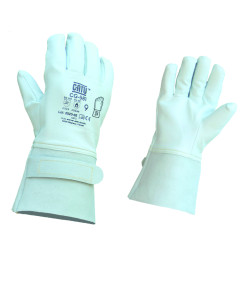
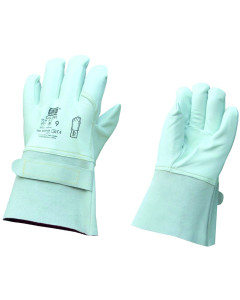
An insulating glove protects you from electricity. It does not protect itself from everything else. Latex gloves should be worn with a leather overglove for mechanical protection, and the overgloves are sized to match, so order the same size as the latex glove underneath. We stock one overglove for Class 00 and Class 0 and another for Classes 1 to 4.
Cotton undergloves are worn next to the skin and make a long shift in latex considerably more comfortable.
Keeping them certified
Insulating gloves are not a buy once item. They have to stay certified to stay useful, and that means testing.
For Class 00 and Class 0 you can carry out your own air inflation test with a pneumatic glove tester, as recommended by EN 60903 and IEC 60903. For Class 1 and above we offer an electrical retesting service, so you can keep a set in rotation rather than replacing them. Every glove we supply is manufactured to EN 60903 and carries its own test stamp.
Sizing
Sizes run from 7 to 12 across the range. Some models have a flared cuff, which makes them easier to pull on over a sleeve. If you are kitting out a team, give us the sizes and we will put the order together with matching overgloves.
Related protection
Gloves are one part of working safely on or near live equipment. The rest of the range covers electrical safety boots, and for thermal protection the arc flash clothing range covers the body, with arc rated gloves where the hazard is heat rather than shock. For a fuller explanation of how the classes work and how often gloves need retesting, read our guide to electrical insulation gloves.
-
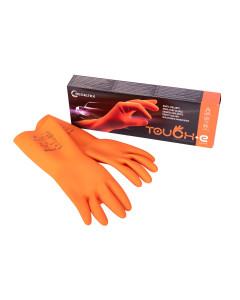 Touch-E Class 0 (1000V) Insulating Gloves with 12Cal/cm2 Arc Flash rating
SKU: ELE100
£65.59 (exc. VAT)